
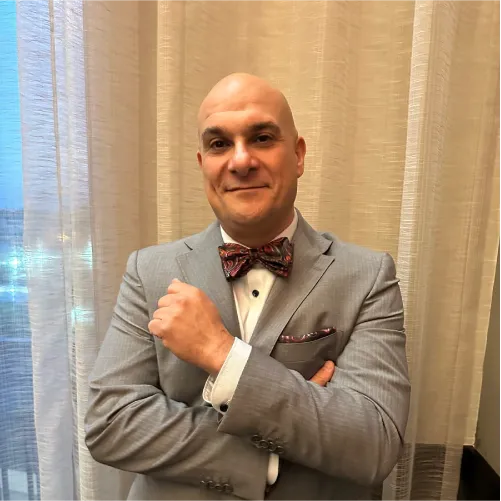
In this episode, The Bow Tie Attorney talks with Florida family lawyer Francesca Sarmiento about protection, dignity, and what it really means to practice family law on purpose. They compare Florida injunctions and Illinois orders of protection, unpack a digital-privacy win after leaked images, and walk through defamation risks, adoption insights, and the habits that help families feel safe.
Most people only meet family law during their hardest seasons: breakups, threats, custody battles, or big transitions like adoption. In this episode, The Bow Tie Attorney sits down with Florida family law attorney Francesca Sarmiento to talk about what it looks like to protect people without losing sight of their dignity.
They compare how Florida injunctions and Illinois orders of protection work, walk through a digital-privacy victory after private photos were leaked online, and show how careful advocacy can keep families safer in the middle of chaos.
Family law is where procedure meets people. The paperwork matters — but the person matters more.
Francesca shares how she built a practice that combines courtroom rigor with trauma-informed intake, clear communication, and practical safety planning. The conversation is honest about fear, conflict, and online harm, but it also stays grounded in hope: the idea that law can be a tool for healing instead of just another weapon.
If you are weighing an order of protection or dealing with threats that will not stop, you do not have to navigate the rules alone.
This episode is built for anyone navigating high-conflict family situations or supporting people who are. In plain language, Mahmoud and Francesca explain how protection tools work, how digital evidence can help or hurt you, and what it looks like to choose advocacy that aligns with your values rather than just “winning at all costs.”
You will hear how thoughtful planning around safety, documentation, and expectations can calm a chaotic case, and why the attorney you choose — and how you communicate with them — can change how the entire process feels.

Mahmoud and Francesca break down how Florida injunctions line up with Illinois orders of protection. The names and forms are different, but the goal is the same: to give people real, enforceable protection when they are dealing with threats, stalking, or domestic violence.
Whether you are in Florida or Illinois, the judge needs the same core things: facts, safety planning, and disciplined evidence.
If you have moved between states or have family split across borders, understanding the similarities and differences helps you work with local counsel faster and more effectively.
One of the most powerful parts of this episode is Francesca’s story of a client whose private photos were leaked online. Instead of reacting emotionally on social media, they built a calm, disciplined response that combined platform reporting, evidence preservation, and legal pressure.
In a digital crisis, your first posts can help your lawyer — or hand the other side exactly what they need.
Mahmoud and Francesca show how a calm plan can protect both safety and reputation without feeding the fire.
Rushing to fight online can make things worse. A few smart moves now can protect both your safety and your reputation later.
Not every harsh word is defamation, but some are. The episode explains how false statements presented as facts — especially accusations of abuse, crime, or professional misconduct — can create real legal exposure even when they are made during a family fight.
Francesca and Mahmoud walk through how to think about screenshots, text threads, and social media posts as evidence. They stress the importance of checking with counsel before airing serious allegations online and of keeping communications factual, necessary, and limited.
Write every message as if a judge might read it one day — because they might.
Francesca also shares how adoption shaped her career and how that personal experience changes the way she guides clients through the process. She explains the legal basics — consents, disclosures, home studies, placement, and the final hearing — in a way that feels human instead of purely procedural.
If you see pieces of your own story in this episode — threats, harassment, leaked images, or family members posting damaging accusations — you do not have to guess your way forward. A few simple steps can protect both safety and options while you figure out the bigger plan.
In crisis work, “What do I do first?” matters. Small, steady steps can keep you safer while the legal side catches up.
Once those basics are in place, talk with counsel who understands both protection orders and the civil fallout around housing, finances, and reputation. For Chicago and Cook County residents, that is where The Bow Tie Attorney and EV Häs, LLC step in — to turn scattered facts into a focused, legally sound plan.
You do not have to choose between emotional support and legal strategy. EV Häs, LLC can coordinate with your existing professionals so your safety plan, court filings, and day-to-day life are all moving in the same direction.
These answers are general education, not legal advice. Protection orders, digital-privacy cases, and family disputes are fact-specific, and the law changes by state. Talk with a licensed attorney in your jurisdiction before making decisions about your own situation.
Both tools are designed to help keep people safe from threats or violence, but the procedures and terminology are different. Florida uses several types of injunctions — for domestic, dating, repeat, sexual, or stalking violence — with a petition, possible temporary order, and a later hearing for a final injunction.
Illinois orders of protection are civil orders under the Illinois Domestic Violence Act and usually move from Emergency to Interim to Plenary stages. Each state has its own forms, deadlines, and standards, so it is important to work with local counsel who understands the details where you live.
First, preserve evidence: take screenshots that clearly show usernames, URLs, timestamps, and the content itself, and save copies in a safe place. Avoid replying publicly to the post or starting a long comment thread — that can tip off the poster and create new statements that may be used later.
Then, talk with an attorney about a coordinated plan that may include platform reporting, takedown requests, protective orders, cease-and-desist letters, and, in some cases, civil or criminal remedies. A calm, structured response usually serves you better than an angry public reaction.
Yes. Heated emotions do not erase defamation law. False statements presented as facts — especially accusations of crime, abuse, or serious professional misconduct — can create defamation exposure even when they are made during a breakup or custody fight.
Before posting about sensitive allegations online, get advice from counsel. In many cases, it is safer to communicate through your lawyer, through the court process, or in carefully documented channels rather than social media.
While details vary by state and by case, most adoptions involve a mix of consents, background checks, home studies, placement, and a final hearing where the judge confirms that all requirements have been met. Agencies and attorneys help manage paperwork, timelines, and communication between everyone involved.
Problems usually arise when people make informal promises, exchange money outside the legal process, or skip important disclosures and records. Staying inside the formal structure can feel slower, but it protects the child, the birth family, and the adoptive family in the long run.
Assume that anything you write may be screenshotted and shown in court one day. Keep communications factual, necessary, and as short as possible. Avoid name-calling, threats, and long arguments in text or on social media — they rarely help and often become evidence.
If you are not sure whether to send a message, pause and ask your lawyer how to communicate instead. Sometimes the safest move is to say less and let formal channels do the talking for you.
If you are in immediate danger, call local authorities and seek emergency protection first. For ongoing support in Chicago or Cook County, you can schedule a consultation with Mahmoud Faisal Elkhatib, The Bow Tie Attorney, through EV Häs, LLC.
Our team helps clients understand their options around Illinois orders of protection, related civil disputes, and the overlap with housing, finances, and reputation so you can make decisions from a place of clarity instead of panic.
Tell us what notice you received or your next court date. We’ll confirm where you are in the process and recommend your strongest next move—without panic or guesswork.
We typically respond the same business day or the next business day.