
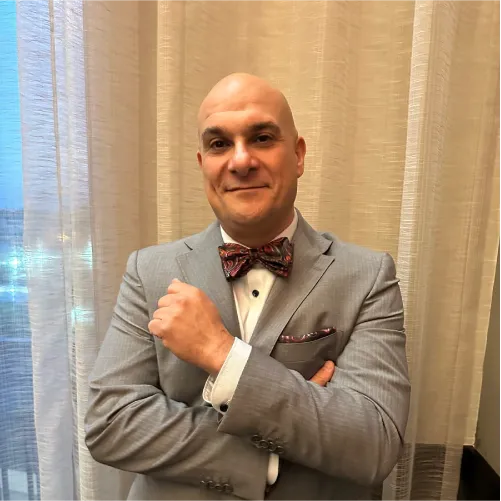
Chicago managing broker Niko Apostal of Essex 312 joins The Bow Tie Attorney to break down how 2–12 unit buildings, ADUs, and smarter financing can quietly build serious wealth in Chicago’s neighborhoods—without turning you into a slumlord or dropping you into a money pit.
Most real estate conversation swings between two extremes: single-family homes and giant apartment complexes. Niko Apostal lives in the middle. For more than twenty years, he has helped people buy, sell, and operate Chicago’s classic 2–12 unit buildings—the two-flats, three-flats, and walk-ups that quietly power entire neighborhoods.
On this episode, he sits down with Mahmoud “The Bow Tie Attorney” Elkhatib to explain why these buildings are such powerful tools for regular people: you can live in one unit, rent the rest, and slowly turn your housing expense into a business that pays you back.
In Chicago, a two-flat or small apartment building is often the difference between just owning a home and owning a real wealth-building asset.
Niko grew up around six-flats on the North Side and has watched entire families change their trajectory by buying the right small building, at the right time, with an honest understanding of the work involved. Mahmoud brings the legal lens: what needs to be in the contract, what can go wrong with city rules and lenders, and how to avoid buying headaches disguised as “cash-flow machines.”
If you are about to house-hack or trade up into a small multifamily, you should not be guessing about leases, zoning, or hidden building issues.
This episode is for house hackers, repeat buyers, and out-of-state investors who keep hearing that Chicago’s small multifamily market is “too competitive” or “too scary.” In plain language, Niko and Mahmoud map out how these buildings really work—from first purchase through long-term operation.
You will hear how to think about rents, expenses, and financing across 2–12 units, why maintenance discipline matters as much as your acquisition price, and how local programs like ADUs can add income without over-renovating every building on the block.

For many buyers, the journey into 2–12 units starts with a condo or single-family home. Niko explains why Chicago’s small multifamily buildings are often a smarter “next step”: you move into one unit, rent out the others, and let the building behave like a business instead of just a place to live.
Owning a small multifamily is not just about buying more space—it is about buying into a different role: owner-operator.
Mahmoud adds where an attorney fits into that jump: reviewing leases, deposits, city rules, and the contract language that can make your first small building a stepping stone instead of a trap.
The financing rules shift as soon as you move from four units to five or more. Niko and Mahmoud walk through the practical differences: loan types, underwriting, documentation, and how lenders view extra income from things like ADUs and garden units.
2–4 units often live in a “residential” world; 5+ units drop you into commercial lending. You need to know which rules you are playing under before you write the offer.
They cover common mistakes buyers make, like assuming a bank will credit unpermitted basement units, overestimating rent bumps, or ignoring how debt-service coverage ratios can kill a deal even when your personal finances look strong. The aim is to help you pick the right loan structure for the building you are buying—not try to force a square peg into a round hole.
If porch repairs, roof issues, code letters, or ADU questions are keeping you up at night, our team can help you understand your options before small problems turn into legal emergencies.
Chicago’s 2–12 unit stock is old—often 80 to 120 years. That history is part of the charm, but it also hides expensive problems. Niko shares his “gotchas” list: porches that are one winter away from replacement, aging boilers and electrical systems, tuckpointing that has been deferred for decades, and flat roofs at the end of their useful life.
Mahmoud explains how those issues show up in legal documents: building-code violations, lender conditions, insurance requirements, and negotiations around credits and repairs. Buying the right building with big deferred maintenance can be fine—as long as you knew what you were buying and you priced it correctly.
“Cash flow” that only works if nothing ever breaks is not real cash flow. In Chicago, your maintenance line item needs to be honest.
One of the most exciting parts of the conversation is how ADUs and garden units can transform an underused basement or coach house into real income. Niko walks through how he thinks about adding units: zoning, lot size, access, light, and what local lenders and appraisers actually recognize as additional value.
From the legal side, Mahmoud stresses the difference between a permitted, legal unit and a “wink and nod” rental that might vanish overnight if the city or lender looks too closely.
Niko is still bullish on Chicago’s small multifamily market, especially in neighborhoods just outside the hottest cores: pockets near the United Center, stretches of the Northwest Side, and blocks where older owners are ready to retire from landlording.
You do not need a “perfect” neighborhood to win. You need an honest read on the block, the building, and the numbers—and a team that will tell you the truth.
He and Mahmoud talk about how to vet brokers, lenders, property managers, and contractors so you are not relying on a single person’s opinion. They also discuss how out-of-state investors can build local relationships instead of flying in once, closing blind, and hoping the property runs itself.
For buyers already under contract, the message is simple: do not ignore red flags because you are afraid of missing the deal. If inspections, rent rolls, or legal research uncover problems, that is the time to re-negotiate or walk away with your head held high—and with counsel who can back you up.
With the right local broker and The Bow Tie Attorney on your side, you can evaluate Chicago 2–12 unit deals with real local insight instead of relying on marketing photos and spreadsheets alone.
These answers are general education, not legal advice. Every building has its own history, financing, and risk profile. Talk with a licensed Illinois attorney, lender, and tax professional about your specific situation before investing.
When Niko and Mahmoud say “small multifamily,” they are usually talking about 2–12 unit buildings: two-flats, three-flats, and small walk-up apartment buildings on neighborhood blocks. Financing and legal issues often shift once you move from four units (commonly residential lending) to five or more units (typically commercial lending).
A condo can be simpler, especially if you are not ready to manage tenants or maintenance. A two-flat or three-flat, however, gives you rental income from day one. For many buyers, living in one unit while renting the others is the fastest way to cut housing costs and start building equity in an asset that behaves more like a business.
The “right” choice depends on your risk tolerance, time, and support system.
At minimum, you should review title, existing leases, security deposits, city permits and violations, current zoning and legal unit count, and any open building-code issues. In Chicago, misunderstandings around illegal units, security-deposit rules, or unresolved violations can turn a “great deal” into years of conflict and surprise expense.
Legal, permitted ADUs and garden units can increase income and valuation because lenders and appraisers may recognize that additional rent. Unpermitted units, by contrast, create risk with lenders, insurers, the city, and tenants. Before you buy, you need to know whether those units are currently legal, whether they can be legalized, and what it will cost.
Yes, but not by guessing from online listings alone. Out-of-state buyers need a strong local team—broker, attorney, inspector, and property manager—who will give honest feedback about condition, tenant quality, and neighborhood trends.
Without that support, it is too easy to overpay, underestimate repairs, or misunderstand local rules.
Ideally, before you are locked in—either before you write the offer or while your contract is still contingent on inspections and financing. That is when there is still time to adjust terms, negotiate credits, or walk away if necessary.
EV Häs, LLC regularly helps Chicago and out-of-state investors review contracts, riders, zoning, and building risks so you are not surprised after closing.
Tell us what notice you received or your next court date. We’ll confirm where you are in the process and recommend your strongest next move—without panic or guesswork.
We typically respond the same business day or the next business day.