
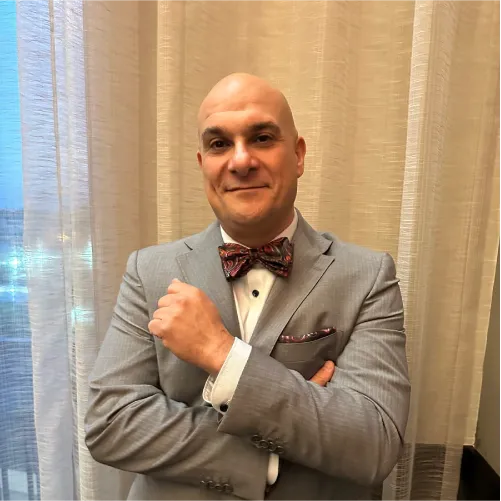
Juan L. Mendoza explains how fourteen years in the restaurant industry prepared him to build a client focused real estate business, earn Rookie of the Year recognition, and begin expanding a family led team. The conversation covers service, referrals, first time buyer education, lender relationships, and the systems required to grow without losing the personal connection.
Before entering real estate, Juan spent many years in the restaurant industry and eventually moved into management. That environment taught him how to serve people under pressure, pay attention to details, coordinate a team, and deliver a consistent experience even when the work behind the scenes was demanding.
The industry changed, but the standard stayed the same. Take care of the client well enough that the relationship continues after the transaction.
Those service habits transferred naturally into real estate. Juan approaches buyers and sellers with the same focus on preparation, communication, and follow through that helped restaurant clients return year after year.
Review your goals, finances, timeline, and available lending options before becoming attached to a property. A strong discovery process can save time and reveal opportunities that were not obvious at the beginning.
Juan describes his central business principle as taking every transaction personally. He stays involved, follows the details, and works toward the result as if the property and money were his own. That level of care has helped clients rely on him during decisions that often feel unfamiliar and emotionally significant.

Juan explains that many new clients come through people he has already helped. Former clients refer family members, friends, coworkers, and customers from their own businesses because they remember how the transaction was handled.
A closing can produce one commission or a long term network. The difference is how the client feels after the keys are delivered.
He and his wife also maintain those relationships through client appreciation events and continued contact. The goal is not to disappear after closing. It is to remain a trusted resource as the client’s housing and investment needs change.
Juan received the 2025 Rookie of the Year award from the Chicago Association of Realtors and was also recognized as a top producer. The awards came after a rapid transition from restaurant management into full time real estate and reflected the volume, service, and momentum he built during his first year.
The recognition was not the business plan. It was evidence that consistent service, activity, and relationships were producing results.
Rather than slowing down after the recognition, Juan began thinking more seriously about systems, community education, and team growth. The next challenge is to expand without allowing the client experience to become less personal.
The broker, lender, attorney, and other professionals should understand the same objective and keep each other informed. Coordination protects the client when deadlines, documents, or unexpected problems appear.
Juan works closely with his wife, Sarah Cervantes, who entered real estate before he did and encouraged him to make the transition. He describes her as the person who supports the business through difficult moments, contributes to client work, and helps maintain the standards behind the team.
Their partnership gives the business a shared purpose, but it also requires clear coordination. They are building a company together rather than simply working two separate books of business.
Growth becomes stronger when the people building the business are pulling in the same direction and protecting the same client standard.
Juan and Sarah have already added another team member and are preparing two longtime friends to enter the industry. Because Juan worked with those friends in restaurants, he already understands their work ethic, communication style, and ability to operate as part of a coordinated team.
The challenge is not simply adding licensed people. Each new member must learn how the team communicates, prepares clients, manages transactions, and responds when problems appear. Expansion only helps when the new person can protect the experience that created the referrals in the first place.
Juan uses a discovery consultation to understand the client’s finances, goals, timeline, and concerns before recommending a lender or property strategy. He and his team regularly speak with lending partners so they can identify programs that may fit different buyers, including first time buyers and investors.
The strongest buyer plan begins with the right questions, not with the first house that appears online.
The episode discusses grants, lender specific portfolio programs, down payment assistance, and other options that may reduce the cash required at closing. Juan is careful to match the program to the person because eligibility, repayment terms, geographic limits, and restrictions can vary.
His broader goal is to help clients stop viewing homeownership as impossible before the numbers are reviewed. Some buyers may be ready now, while others may need several months of preparation. In either case, a clear plan is more useful than a vague promise.
A larger team only creates value when every member protects the standards that built the business. Define the process, train the people, and keep the relationship personal as the operation expands.
Customer service, attention to detail, time management, communication, teamwork, and the ability to remain calm under pressure all transfer directly into real estate transactions.
Referrals allow a new agent to build on trust that already exists. A client who had a strong experience can introduce the agent to people who are more willing to begin a conversation.
A team may make sense when the workload begins to threaten response time, service quality, or business development. The owner should first define roles, standards, training, and accountability.
The agent learns about the buyer’s income, savings, credit concerns, timeline, preferred location, household needs, and long term goals before recommending the next steps.
No. Eligibility may depend on income, credit, location, occupancy, loan type, lender rules, and funding availability. Buyers should confirm current requirements with a qualified lender.
A portfolio loan is generally kept by the lender instead of being sold under a standard secondary market program. Because the lender controls the product, the terms and eligibility may differ from conventional loan options.
Tell us what notice you received or your next court date. We’ll confirm where you are in the process and recommend your strongest next move—without panic or guesswork.
We typically respond the same business day or the next business day.
Need help?