The biggest mistake homeowners make is treating foreclosure like a single event. In reality, it’s a sequence of court steps and deadlines. Some of those steps are routine status calls. Others are moments where a lender asks the judge for something that permanently changes your position—like a default order or a judgment.
If you know what stage you’re in, you can usually make better decisions: defend, negotiate, reinstate, modify, sell, or pursue another strategy that matches your timeline.
Quick reality check:
If you have a case number and court date, the timeline is already running. The earlier you organize the file and respond correctly, the more options you usually preserve.
Below is a plain-English breakdown of the Illinois foreclosure timeline, why an “uncontested” case moves faster, why a contested case can stretch much longer, and how a qualified attorney can change the pace with good-faith, meritorious work.
Not Sure What Stage You’re In?
Send your most recent court paper or letter. We’ll help you identify your stage and the next deadline that matters.
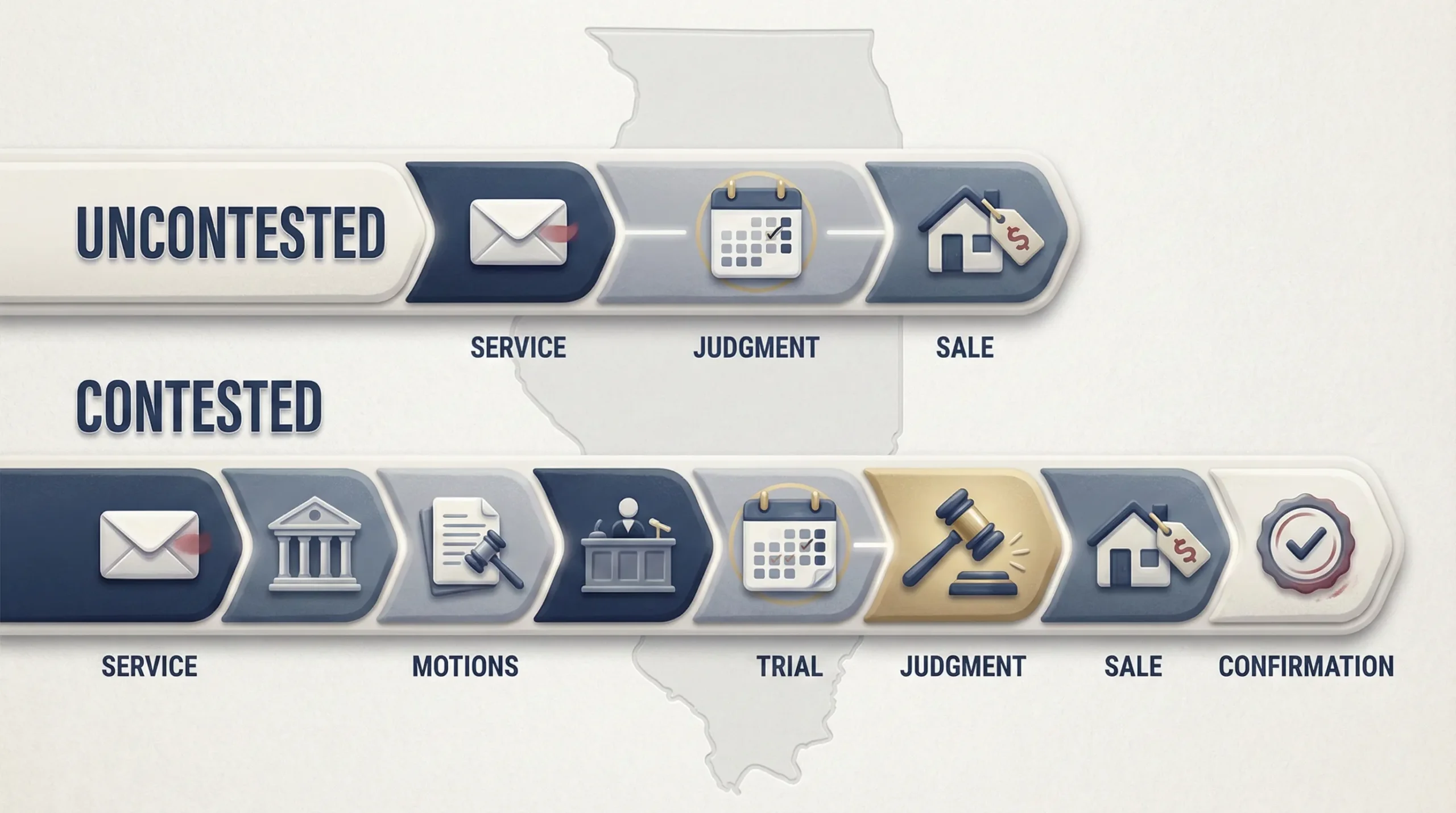
Uncontested Foreclosure Timelines (The “Fast Track” Case)
An uncontested foreclosure is a case where the homeowner does not meaningfully participate in the court process—no proper appearance, no answer, no real defense strategy, and no structured negotiation that affects the litigation calendar.
On EV Häs’ timeline page, the stated statutory timeline for an uncontested Illinois foreclosure is typically about 10–12 months from a borrower’s first missed payment. In real life, schedules vary, but the core point is consistent: when nothing is contested, the case can move quickly because the court has little reason to slow it down.
What “Uncontested” Usually Looks Like in the Court File
Uncontested does not always mean the homeowner “gave up.” It often means the homeowner is overwhelmed, confused by paperwork, or trying to handle everything through phone calls with the servicer while the court case quietly keeps moving.
Common signs of an uncontested file include:
- No timely appearance/answer on record
- Missed court dates or repeated “no show” status calls
- No organized loss-mitigation paper trail tied to court continuances
- Little or no pushback when motions are presented
Why it matters:
When the file is uncontested, the lender’s requests (default, judgment steps, scheduling) face fewer obstacles—so the calendar often tightens.
If your goal is to keep the home, negotiate a modification, or even sell on your terms, you typically want to avoid “default momentum.” That starts with confirming your stage, organizing the record, and making sure the court sees that something real is happening—either a defense strategy or a structured resolution path.
Contested Foreclosure (When the Case Slows Down—and Why)
A foreclosure becomes contested when the homeowner participates and the case requires more work from both sides and the court. That could mean raising defenses, challenging proof, litigating motion issues, or coordinating negotiation timelines (like mediation or loss mitigation) with the court calendar.
EV Häs’ timeline page notes that a contested foreclosure can take up to two years or longer, depending on the skill of counsel and the client’s goal. Some cases resolve sooner through settlement; others last longer when real issues must be litigated.
Contested does not mean “frivolous.”
A good-faith defense uses substantive pleadings and real issues—because weak filings can backfire and accidentally shorten the timeline.
In contested cases, time is not the only objective—leverage is. Good lawyering can slow the case when needed, accelerate it when the client wants a faster exit, and force clarity when the lender’s numbers or paperwork don’t add up. The point isn’t delay for delay’s sake. The point is using the timeline to reach a better outcome.
Court Date Coming Up Soon?
A fast document review can clarify what the lender is asking for and what you should be ready to address.
The Timeline Checkpoints Homeowners Should Actually Track
Foreclosure feels confusing because it’s a mix of legal milestones and practical milestones. You don’t need to memorize every statute to protect yourself—you need to track the checkpoints that move the case forward and shrink options if ignored.
Core checkpoints to track:- First missed payment: your “financial timeline” begins
- First legal filing / service: your “court timeline” begins
- Response window: your chance to prevent default momentum
- Motions: moments where the lender asks the judge for major relief
- Judgment stage: the case shifts from “in progress” to “sale track” if not resolved
- Redemption window: an important statutory timing concept in Illinois
- Sale / confirmation / possession: the end-stage sequence if the case reaches a sale
The Redemption Window in Illinois (Why the Calendar Matters)
One of the most misunderstood parts of the Illinois timeline is the redemption period. In many residential cases, the redemption period ends seven months after service of summons or three months after entry of a judgment of foreclosure, whichever is later. This concept matters because it helps define when a case can move into the sale phase in many situations.
Redemption can be shortened in certain situations (for example, abandonment-related rules), and the exact impact depends on the facts and what the court has already entered. The safe approach is simple: don’t assume. Confirm what’s on the docket and what deadlines the court is actually using in your case.
How a Qualified Foreclosure Attorney Can Change the Pace
Foreclosure defense is not just “showing up.” It’s knowing what the judge expects, what the lender must prove, and how to make requests in a form the court will take seriously.
EV Häs’ timeline page highlights that qualified counsel can extend or accelerate the timeline with meritorious, good-faith defenses aligned to the client’s goal.
Translation:
The right pleadings and the right timing can preserve options. The wrong filings—or no filings—can collapse the timeline faster than most homeowners realize.
The difference is often visible in the court file: organized records, clear motions, consistent negotiation progress, and fewer avoidable mistakes. That doesn’t guarantee a result—but it often changes the tone of the hearings and the leverage available to reach a better resolution.
How to Use the Time Between Court Dates Wisely
Court dates can feel like the “main event,” but most progress happens between hearings. If you only react the night before court, you’ll always feel behind—and you’ll often miss opportunities to control the pace of the case.
Between court dates, your job is to turn the case into a simple system:
- One folder for court documents (summons, complaint, motions, orders)
- One folder for servicer communications (letters, modification decisions, statements)
- A running timeline with dates, names, and what was promised
- A checklist tied to your goal: keep, negotiate, reinstate, or exit
Most expensive mistake:
Trying to “work it out” by phone while ignoring the docket. The court case does not pause just because someone said “your application is under review.”
Even if your long-term plan is a modification or a sale, you still want court deadlines under control. That’s how you avoid emergency scrambling and last-minute surprises.
Turning the Timeline Into a Checklist for Your Next Court Date
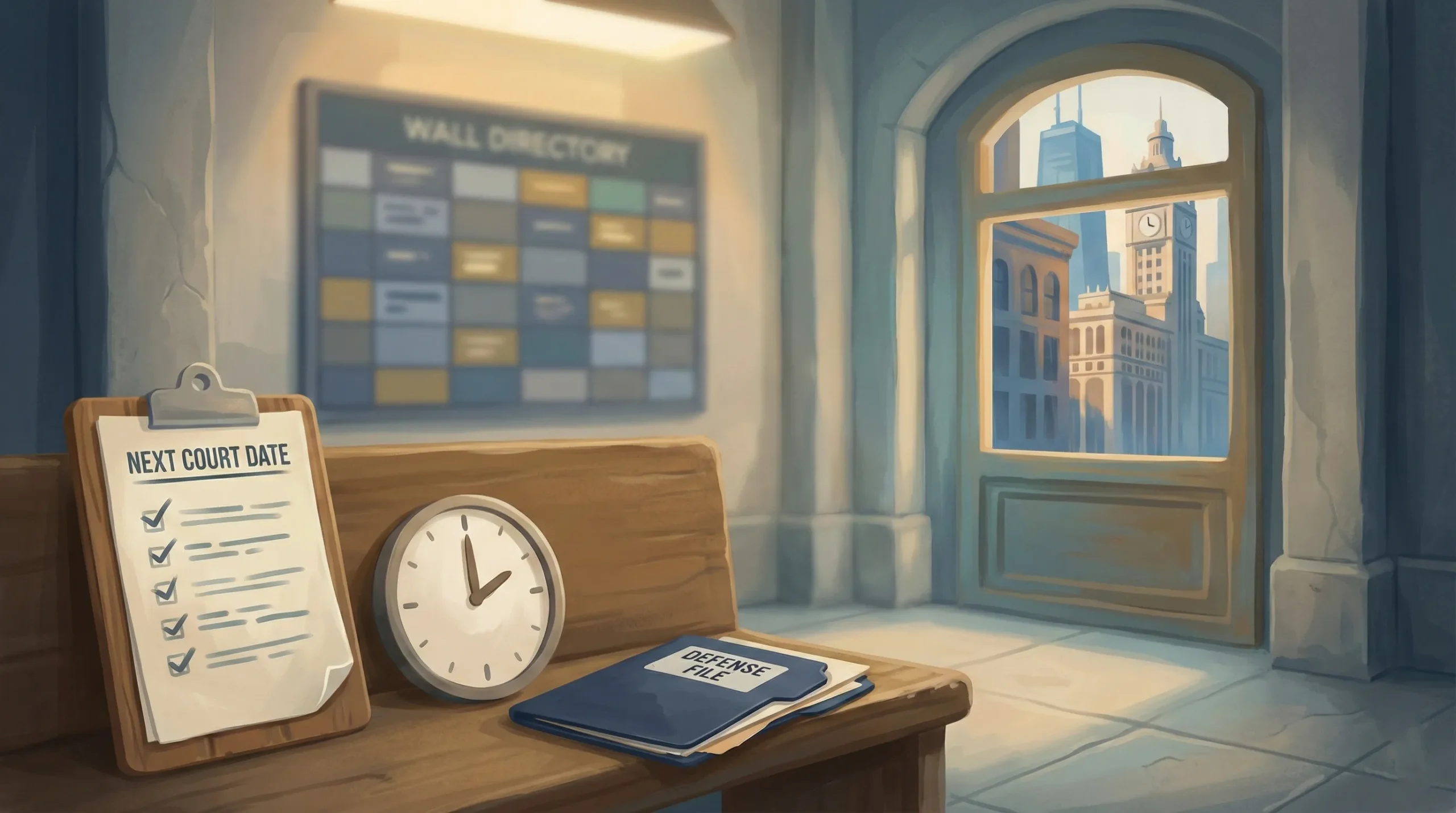
If you have a court date coming up, your goal is to walk in with clarity: what stage you’re in, what the lender is asking for next, and what you need to request or complete before the next date.
Bring these basics:- Your most recent court order (if you have one)
- The most recent motion filed by the lender (or a summary of it)
- Any proof of loss mitigation submissions (upload confirmations, emails)
- Your goal in one sentence: keep, negotiate, reinstate, or exit
If you’re represented, your attorney can usually appear and handle the courtroom conversation—while you focus on gathering what’s needed for the next step. If you’re not represented, the checklist above helps you avoid the most common pitfall: showing up without knowing what the other side is asking the judge to do.
Reminder: The timeline is not destiny. It’s a framework. With the right planning, you can often preserve options longer, negotiate more effectively, or exit on terms that protect you better than a rushed, last-minute scramble.
Need a Strategy, Not a Speech?
Call (312) 775-0980 or email us. We’ll talk goals, timelines, and the most realistic next steps for your situation.
Frequently Asked Questions
Educational information only. Not legal advice. If you have a pending case, deadlines matter—talk to a qualified attorney about your file.
Written By: