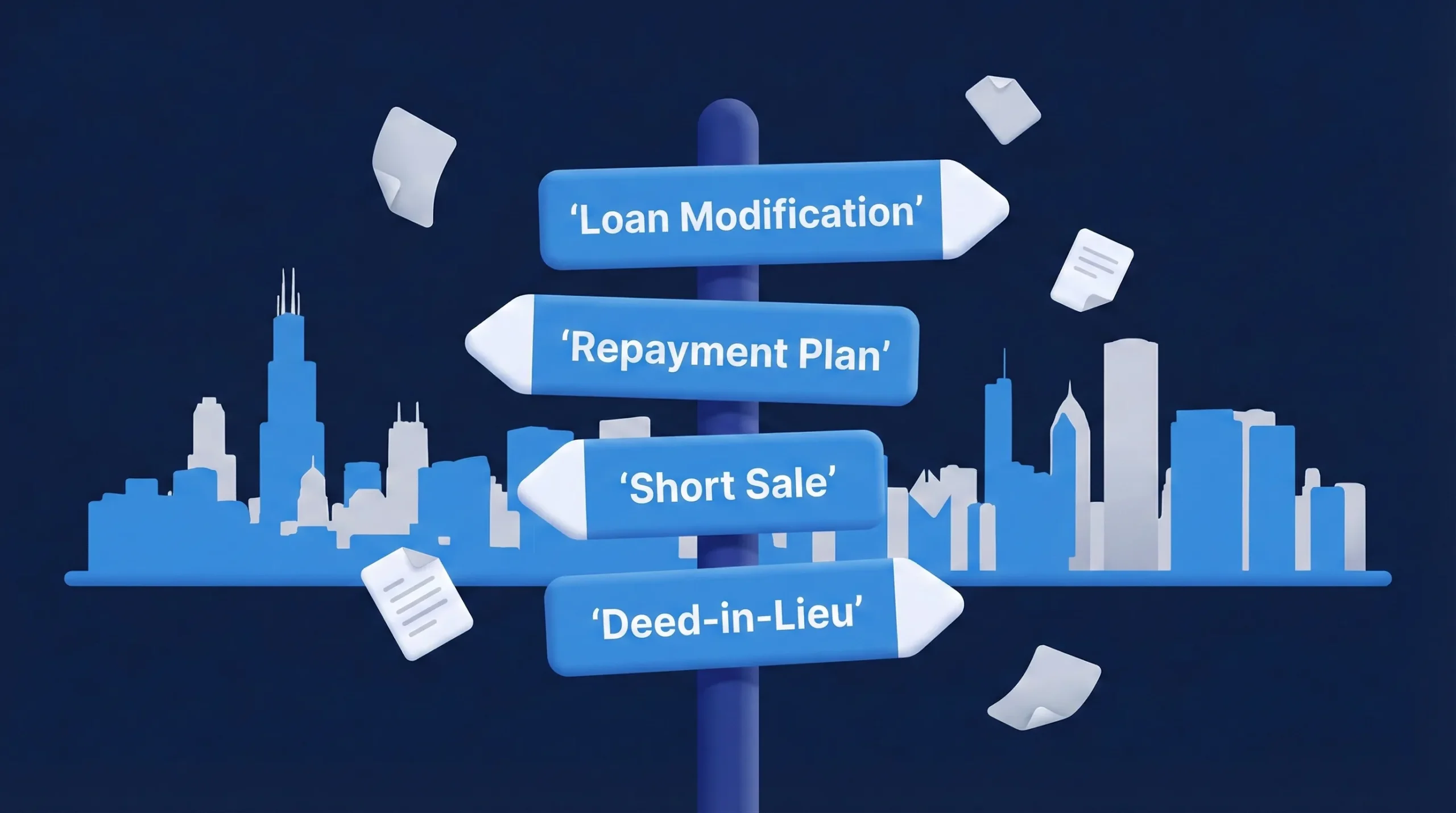
Loss mitigation sounds like lender jargon, but the idea is simple: when your mortgage is in trouble, the servicer may offer alternatives to foreclosure if you submit the right information at the right time.
This page explains the four options people in Illinois search for most: loan modification, repayment plan, short sale, and deed in lieu of foreclosure. You will learn who each option fits, what it costs in time and logistics, and what to gather so you are not stuck in “missing documents” limbo.
Important (read this first): Loss mitigation is time-sensitive. Waiting does not create leverage, it usually reduces it. If you have a court date, a sale notice, or you were served foreclosure papers in Illinois, treat it as urgent and get your documents reviewed.
This article is written by Damon Ritenhouse at EV Häs. Damon’s style is practical and deadline-driven: understand what the paperwork says, confirm what stage you are in, and build an evidence-based plan you can explain without legal noise.
Disclaimer: This is general information, not legal advice. Results vary based on facts, documents, and timing, and this does not create an attorney-client relationship.
Request a Free Case Analysis
Send your latest letter or notice and tell us what changed (income drop, escrow jump, hardship). If a foreclosure case has been filed, include the case number and any upcoming dates.
What “loss mitigation” means in Illinois
Loss mitigation is a broad label for foreclosure alternatives offered through the mortgage servicer. The goal is usually one of two things:
- Keep the home: change the payment or catch up over time (modification or repayment plan).
- Exit with control: sell the property or transfer it in a structured way (short sale or deed-in-lieu).
In Illinois, the best option often depends on
timing (how far behind you are),
income stability,
equity, and whether a
foreclosure lawsuit is already moving in court.
The three questions that usually decide the right option
1) Can you afford a payment going forward?
If the future payment is not realistic, the best strategy may be an exit option, not a “bigger paperwork push.”
2) How much time do you actually have?
If deadlines are close, you need a plan that matches the calendar, not the hope.
3) What does the file prove?
Servicers respond to documentation. A strong submission is clear, complete, and consistent from the first page to the last.
Quick note about Illinois foreclosure timelines:
If a foreclosure lawsuit has already been filed, you are managing two tracks at once: the servicer’s review process and the court’s schedule. You do not want one track to default while you wait on the other.
If you are unsure where you stand, start by identifying the most recent document you received: a default letter, a summons/complaint, a motion, a judgment order, or a sale notice. The stage matters because it controls urgency and what options are still practical.
The four main options (and who each one fits)
Below is the plain-English decision guide most homeowners wish they had at the beginning. None of these options are “magic.” Each has tradeoffs in time, credit impact, and paperwork, and the best choice depends on your goals and your timeline.
Option A: Loan modification- Best for: homeowners who can afford a payment going forward, but need a lower payment or a structure that makes catch-up possible.
- What it changes: typically the payment terms (and sometimes past-due amounts are addressed through the new structure).
- Main cost: time and documentation. Mod reviews can stall if the package is inconsistent or incomplete.
Option B: Repayment plan- Best for: homeowners who had a short-term disruption and can pay the normal payment plus an additional catch-up amount.
- What it changes: usually spreads arrears across a set number of months.
- Main cost: cash flow pressure. Plans can fail if the catch-up amount is not realistic.
Option C: Short sale- Best for: homeowners who need to sell, but the sale price may not cover the full mortgage payoff.
- What it changes: the lender agrees to accept less than the balance under approved terms.
- Main cost: coordination. You must align listing, contract language, payoff demands, title issues, and deadlines.
Option D: Deed-in-lieu of foreclosure- Best for: homeowners who want a faster exit when a sale is not realistic, and the lender is willing to accept the deed.
- What it changes: ownership transfers to the lender under agreed conditions.
- Main cost: eligibility and title. Liens, junior mortgages, HOA issues, or title problems often block this option.
A simple rule of thumb: if you can afford a future payment, you usually start by comparing modification vs repayment. If keeping the property is not realistic, you compare regular sale vs short sale vs deed-in-lieu based on equity, liens, and timeline.
Already in Foreclosure?
If you were served papers in Illinois, do not assume a loss mitigation application pauses court deadlines. Call so we can align your options with the case timeline.
What documents usually matter (so you do not get stuck)
Most loss mitigation failures are not because the homeowner “did not qualify.” They fail because the submission was unclear, incomplete, or inconsistent, and the servicer kept resetting the review with new document requests.
A clean loss mitigation package often includes:- Income proof: paystubs, benefits letters, or self-employment documentation.
- Hardship explanation: a short, factual summary of what changed and what is stable now.
- Expense picture: housing costs, insurance, utilities, childcare, medical, and other major obligations.
- Bank statements: typically recent months, complete pages.
- Tax returns: recent returns if required.
- Property details: occupancy, unit count (especially for 2–4 flats), and rental income documentation if applicable.
- Foreclosure case documents (if filed): summons/complaint, court notices, motions, and any sale notice.
Reality check: Submitting documents does not automatically stop court deadlines. If litigation is active, your plan must cover both tracks.
Common pitfalls we see in Illinois loss mitigation cases
Pitfall 1: Waiting for the servicer to “get back to you.”
Silence is dangerous when you have deadlines. If you have a pending foreclosure case, you cannot treat loss mitigation like a casual customer service request.
Pitfall 2: Choosing an option that does not match your budget.
A repayment plan that you cannot realistically sustain often leads to a second default, and that is usually worse than choosing a different path earlier.
Pitfall 3: Treating a sale like “just list it.”
When foreclosure is pending, a sale requires coordination with payoffs, title objections, and court timing. Contract language matters, deadlines matter, and pricing must match the distressed timeline.
Pitfall 4: Ignoring second liens and HOA issues.
Junior mortgages, HOA balances, and other liens can block a deed-in-lieu and complicate a short sale. Title clarity is not optional, it is the foundation of any clean exit.
Special note for Chicago and Cook County 2–4 flats
In Chicago and Cook County, 2–4 unit properties create extra moving parts: tenant leases, rent ledgers, repair obligations, and sometimes mixed occupancy. These details affect both affordability reviews and exit options.
If you own a 2–4 flat, gather:- Current leases (or written tenant terms)
- Rent ledger and proof of deposits
- Unit occupancy and any vacancy timeline
- Repair invoices and code notices (if any)
- Insurance declarations page
Whether the right answer is a modification, a structured sale, or a faster exit, the goal is the same: keep the legal timeline and the transaction timeline synchronized so you do not lose options by accident.
If you are behind on payments in Illinois, start here
If you are anxious, that is normal. The fastest way to feel steady is to get organized and focus on the next decision, not the whole problem at once.
3-step checklist:- Identify your stage: default letter, foreclosure summons/complaint, motion, judgment, or sale notice.
- Build your packet: income, expenses, bank statements, hardship explanation, and any foreclosure case documents.
- Choose a direction: keep the home (mod/repayment) or exit with control (sale/short sale/deed-in-lieu).
Call (312) 775-0980 or request a free case analysis.
If you have a court date or sale notice, mention it first so we can triage urgency.
When you work with our team, you should expect plain-English answers and a plan that fits your calendar. Damon’s approach is simple: confirm the stage, protect deadlines, and make sure the documents support the strategy.
Next steps and FAQs
Loss mitigation works best when you treat it like a project: clear goal, clean documents, and realistic timing. The questions below are written the way people search, with general answers that depend on your facts.
Want clarity fast?
Tell us what you received, what date is coming up next (if any), and what outcome you are trying to protect. If a foreclosure case is already filed, include the county and case number.
If you are also researching foreclosure stages, these topics often connect:
- Notice of default vs foreclosure lawsuit in Illinois (what letters mean vs what court papers mean)
- Foreclosure summons in Illinois (what to do after service)
- Cook County sheriff sale (what the notice means and what timing matters)
Disclaimer: This page is for informational purposes only. It is not legal advice and does not create an attorney-client relationship. Results vary based on facts, documents, timing, and court procedures.
Selling Instead of Fighting?
If keeping the home is not realistic, a clean exit still takes strategy. We can help you compare a regular sale, short sale, or deed-in-lieu based on your timing and title issues.
Loss Mitigation FAQ (Illinois)
Search-style questions with plain-English answers (general information only).
Written By: