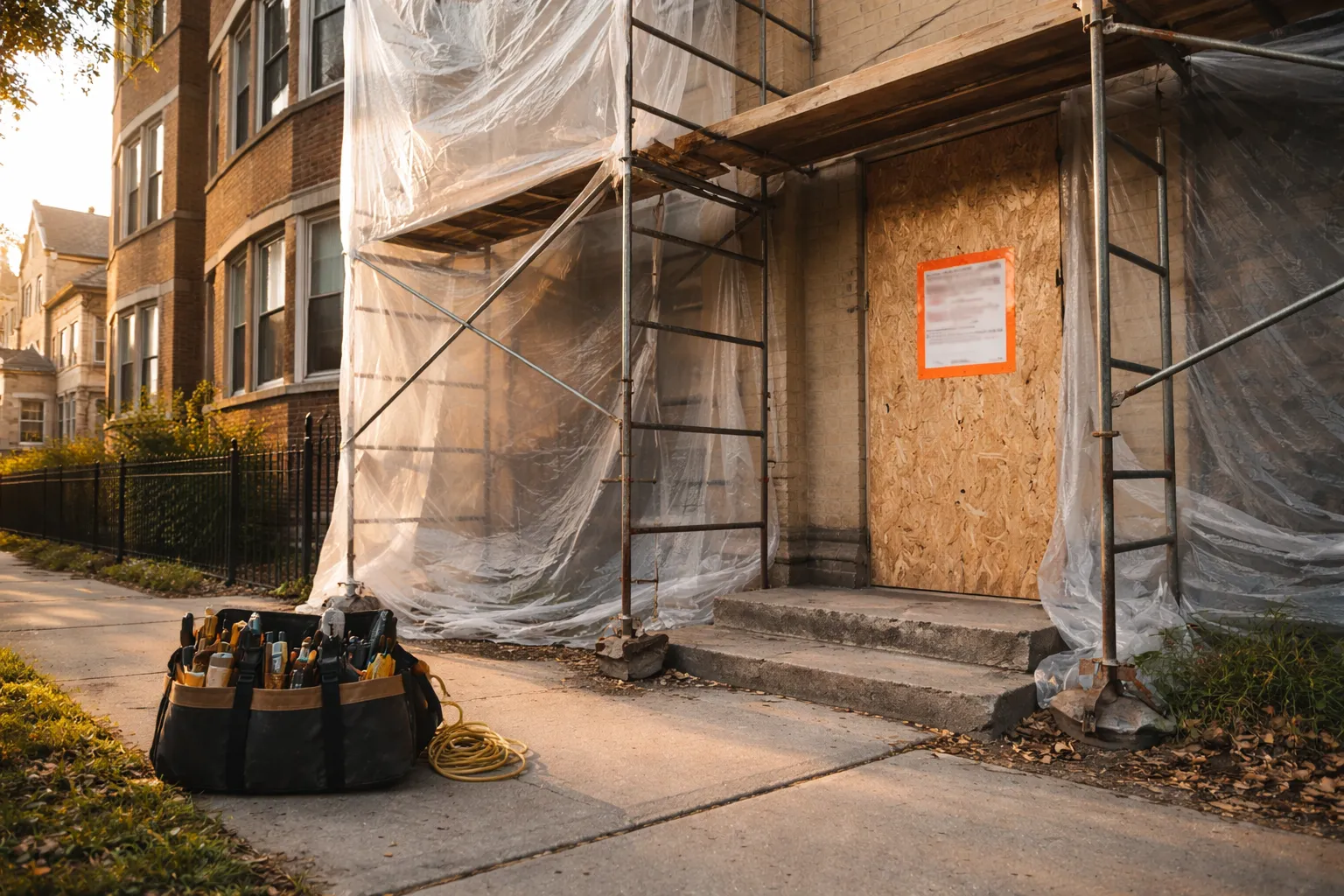
Imagine this. You are renovating a two flat. Demo is done, materials are delivered, and then an inspector shows up. Sometimes it is a neighbor complaint. Sometimes it is a 311 report. Either way, you end up with a notice and a very uncomfortable question, “Can we keep working.”
Quick reality check
A stop work order is not a suggestion. If the City says stop, your best move is to pause, pull the record, and map out a compliance path you can prove on paper.
This article is general information, not legal advice. Permits and enforcement can be fact specific. If you have a live notice, an active sale, or a lender deadline, get a fast review before you make decisions that lock you into delays.
Need a permit and stop work order review
Send the notice, the address, and a short description of what work has been done. We can help you identify what permits likely apply, what the record shows, and what it would take to get the site back into compliance.
Why this happens so often in Chicago
A lot of owners think permits are only for big additions. In Chicago, unpermitted work is one of the fastest ways to end up on the City’s radar, especially when visible exterior work or noisy interior demolition triggers a complaint. Tenants and neighbors can report building conditions through 311, and an inspection can lead to a citation and enforcement steps.
Chicago also publishes public datasets for building violations and stop work orders, which is a good reminder that these records can follow the property and show up during diligence.
Stop work orders and unpermitted work are linked in the code
Chicago’s construction code includes a stop work order section that covers work done without a required permit. A prior version of the building code also states you cannot begin work that requires a permit until the permit is issued, and that violations can trigger a stop order.
Do not try to talk your way out of a record
The City record is what lenders, buyers, and title teams look at. Your job is to fix the condition and fix the paperwork so the record can move toward closure.
If you are thinking, “But it was only a kitchen,” you are not alone. The problem is that kitchens often touch plumbing, electrical, ventilation, and sometimes structural work. That is where permit risk shows up.
First step pull the address record and save it
Before you call contractors back or start rewriting your scope, pull the City record by address. Chicago’s Building Permit and Inspection Records system is the most common starting point. It includes an important warning that the database is informational and the absence of violations does not mean a property is compliant.
Building Permit and Inspection Records
Print the record
Save PDFs of the violations, permit history, and inspection details. If the matter goes to enforcement or a hearing, your timeline should be based on what the record says, not what someone remembers.
Also notice what the portal says about escalation. It explains that the Department of Buildings may refer alleged violations for enforcement in the Department of Administrative Hearings or the Circuit Court of Cook County.
Buying a property with active violations or a work history
Before you close, pull the address record and look for open items. We can help you translate the record into a real scope, timeline, and cost risk you can negotiate.
What you can fix fast and what you should not guess on
Some work is truly cosmetic. Chicago lists examples of work that can be exempt from a permit, like certain finish work such as painting, flooring, cabinets, and countertops when it does not involve plumbing or electrical connections. That said, do not treat this as a blanket rule. The details matter, and the same room can easily cross the line into permit required work.
Good rule
If the work touches structure, egress, plumbing, electrical, gas, mechanical, or changes the number of units, assume you need a permit review before you move forward.
How to get back into compliance without making it worse
Here is the clean approach. Pause the work. Pull the record. Clarify the scope. Then decide whether you need to apply for a permit that covers the work already done and the work still planned.
Chicago’s code addresses what happens when you apply for a permit after a stop work order or after unpermitted work has already been completed. It says the new or revised permit must cover all previously unauthorized work, and that a penalty is added to the regular permit fee.
Stop work order cleanup checklist
- Pull the address record and save the violation details as PDFs
- Write a one page scope summary of what was done and what is planned
- Collect contractor invoices, photos, and dates that match the scope
- Ask whether the permit application needs drawings and licensed professional stamps for your scope
- Apply for the correct permit or permits that cover the full job, including prior work
- Document every inspection request and outcome
- Keep a single folder that you can hand to a lender, buyer, or hearing officer
Your goal is boring paperwork
The best outcome is not drama. It is a clean record and a predictable timeline. When your file is organized, it is easier to move through inspections and it is easier to explain the situation if a buyer or lender asks questions.
Mistakes that make a small issue expensive
The fastest way to extend a stop work order is continuing work while you “figure it out.” The second fastest is applying for a permit that only covers the remaining work, then getting stuck because the record still shows completed unpermitted work that was never legalized.
Another mistake is relying on the portal as if it is the full truth. Chicago’s own disclaimer says the record is informational and may not reflect current conditions, and lack of violations on the site does not equal compliance.
Real estate deals hate uncertainty
If you are planning to sell or refinance, open violations and open permit problems often surface at the worst time. Handle them early so your transaction does not turn into a negotiation under pressure.
If the issue involves life safety conditions, treat it as urgent. Those situations can escalate beyond administrative fines and can affect occupancy and access.
How a lawyer looks at this situation
A good review usually starts with classification. What work was done, what permits are required, what the City record says, and whether enforcement has already moved toward a hearing or court. Then it becomes a documentation project, because the record has to match the fix.
Stop work orders are a timeline problem
If you act early and stay organized, you can often turn this into a manageable delay. If you wait, costs stack up, the record gets messier, and your options shrink.
If you manage multiple properties, build a simple rule into your process. Before any major work starts, run a permit check and save the decision in your project folder. It is one of the cheapest ways to protect your cash flow.
Scheduled for an administrative hearing
If the case is headed to a hearing, you need a focused evidence pack. We can help you build the timeline, organize proof, and avoid the common mistakes that make simple issues expensive.
Questions people ask after a stop work order
General information only. If you have an active notice or a hearing date, get case specific advice.
Written By: