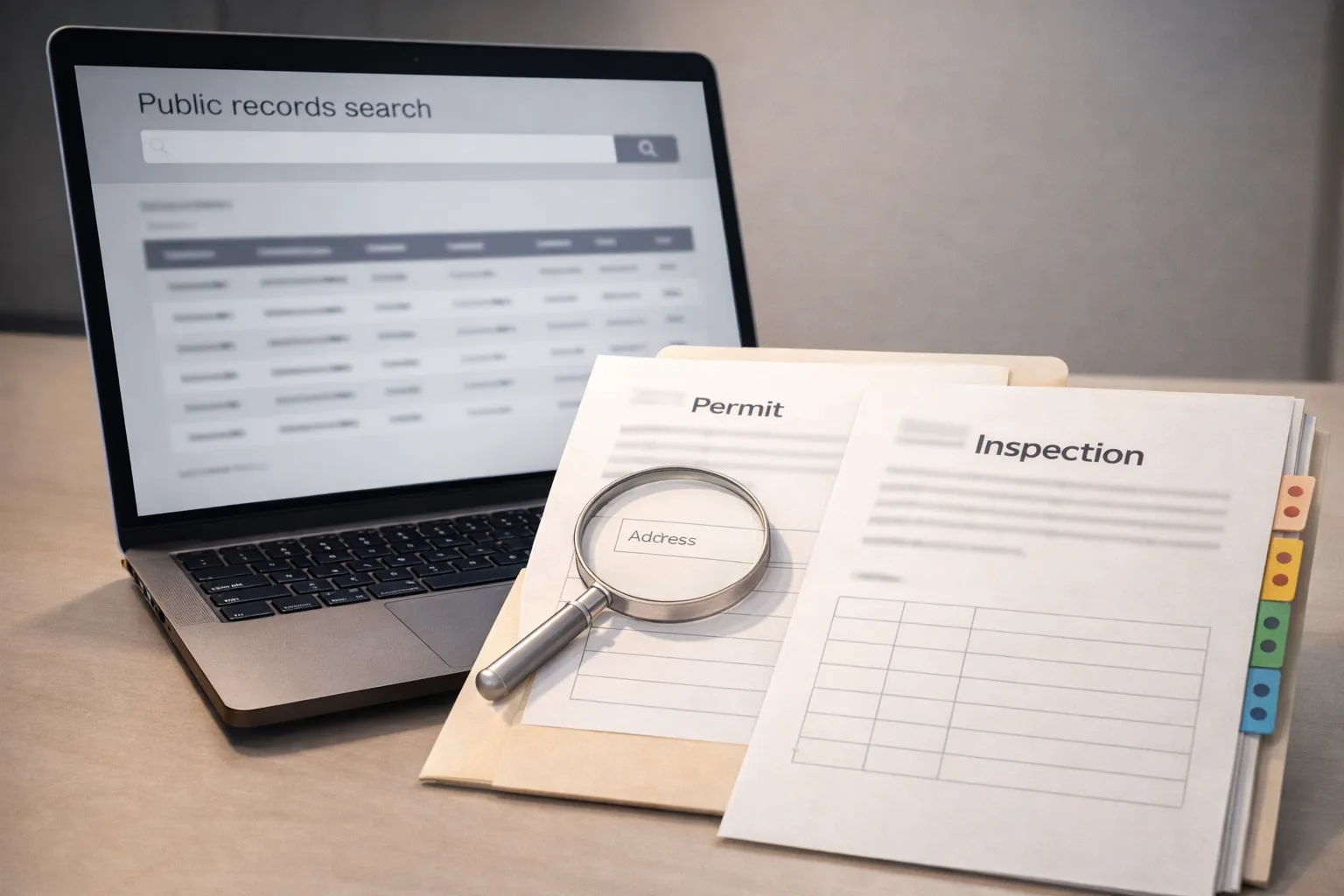
Building code violations in Chicago usually start one of two ways: an inspection tied to a complaint, or an inspection connected to permitting and construction activity. The City’s Department of Buildings maintains public records for permits, inspections, and violations, and you can often verify what the City has on file by searching the address.
Important:
This article is general information, not legal advice. Rules can change, exemptions exist, and outcomes depend on facts, proof, and timing.
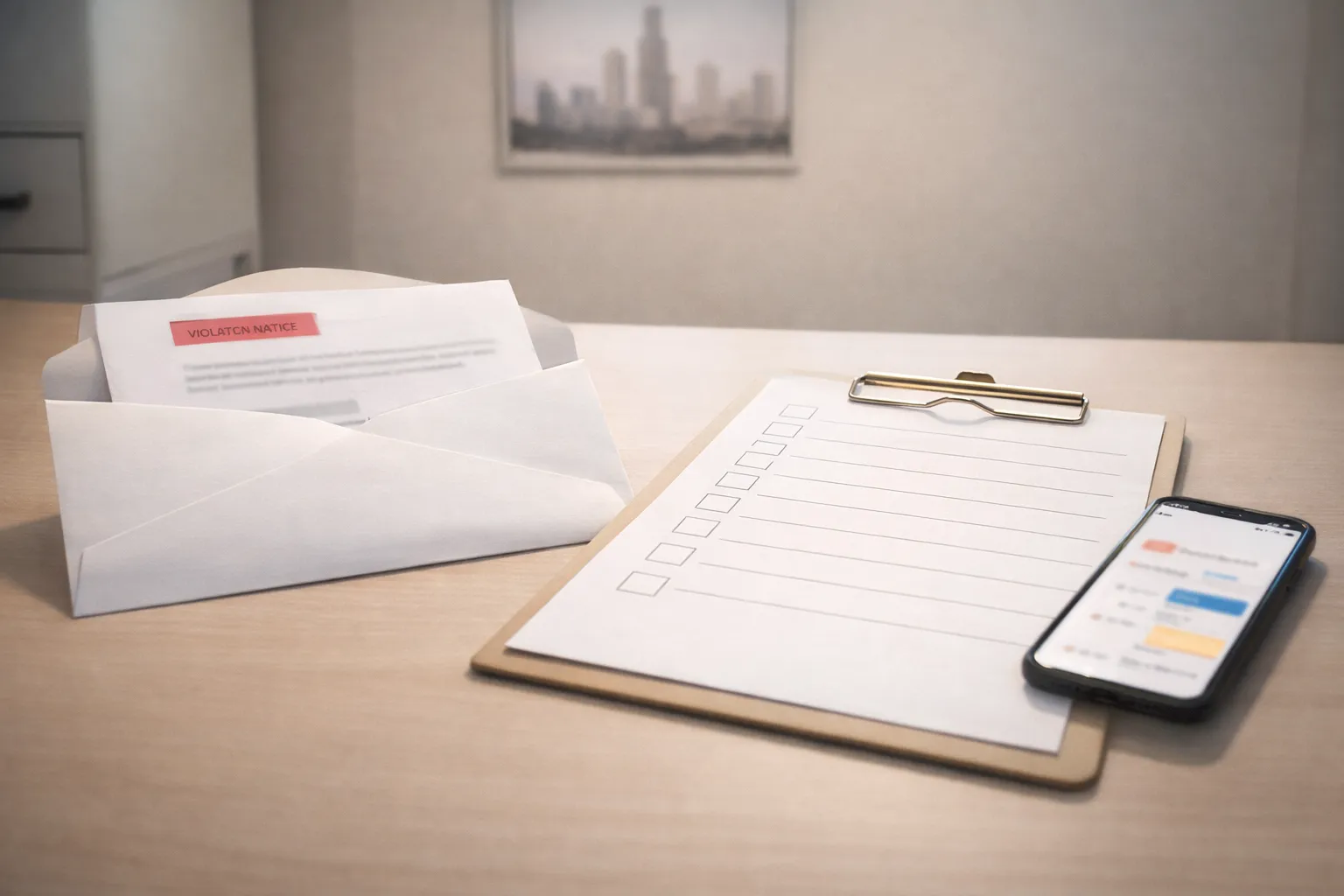
If you received a notice, your goal is simple: identify what the City says is wrong, confirm what system shows the record, correct the condition legally with the right permits when needed, and document everything like you expect a hearing officer or judge to read it later.
Need a fast violation review
Bring the notice, photos, and any permit history you have. We can identify the likely path, hearing risk, and the fastest compliance plan that protects your timeline.
What a building code violation is in Chicago
A building code violation is a claim by the City that a property condition, work, or use does not comply with the Municipal Code and the Chicago Construction Codes. Some violations are life safety issues. Others are paperwork issues, like missing permits or incomplete inspections. Either way, the key point is that the City is creating a record, and that record can affect your hearing risk, your ability to sell, and your ability to complete permits.
To look up violations, permits, and inspection history by address, use the City’s building records search tools and related public datasets:
If you found out through 311 or a complaint inspection
Many inspections start with a complaint. The City’s 311 resources list examples of the kinds of issues people report, such as missing or broken windows, falling exterior materials, illegal units, and other safety concerns. Complaint driven inspections often move quickly because the City is reacting to a reported condition, not waiting for a planned construction timeline.
Chicago 311, building violations overview
Do not guess what the City means.
Match the notice language to the exact record that appears in the City system, then build your plan around what the record says, not what you think it says.
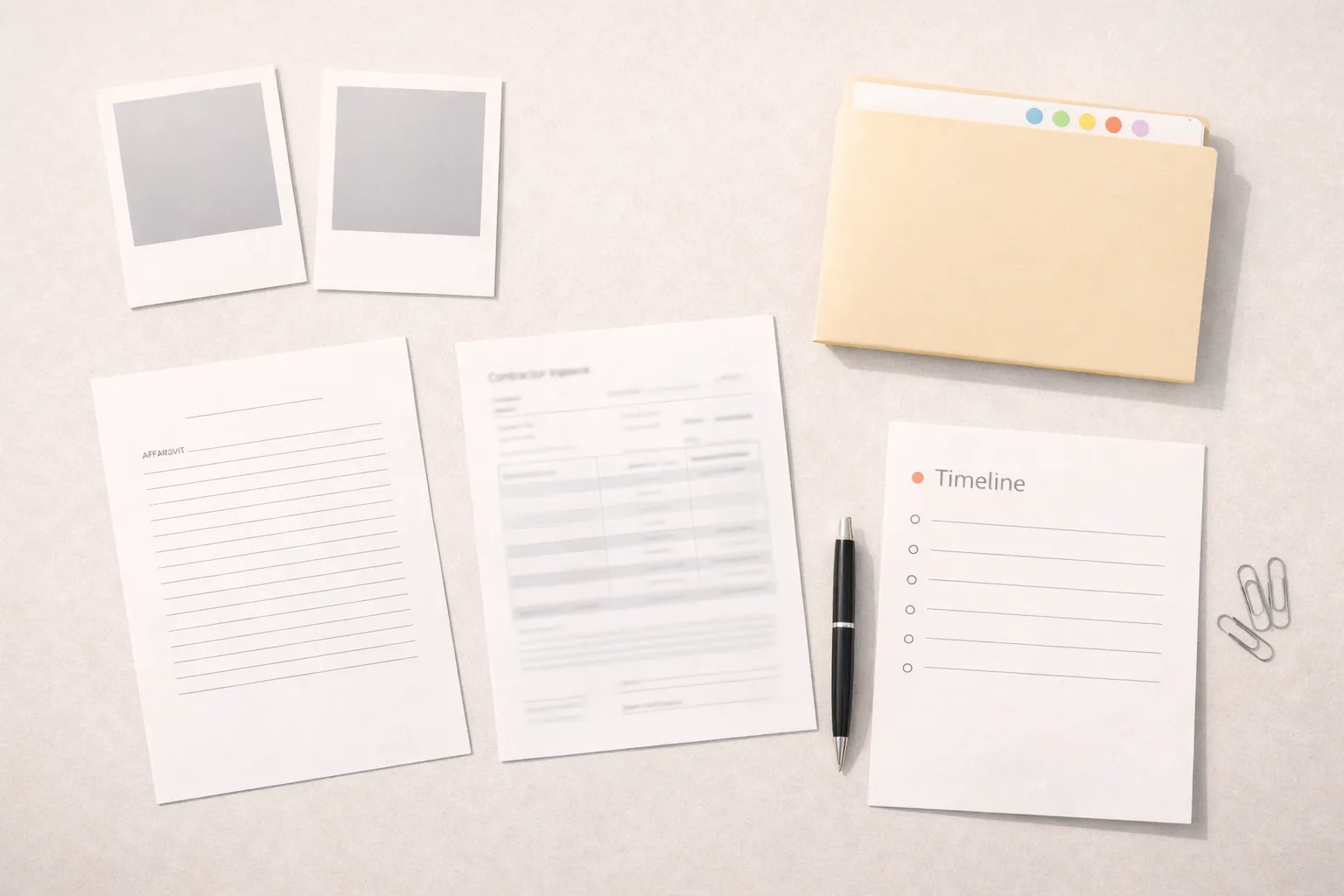
Best practice: pull the record, save it as a PDF, then create a one page timeline showing when the condition started, when you learned about it, and what you did to correct it. That timeline becomes your backbone if a hearing happens.
What happens after a notice, inspections, reinspections, and hearings
After a notice, the next steps depend on the violation type. Some matters are handled through follow up inspections. Others are scheduled for an administrative hearing. Chicago explains the hearing process, including service of notice, the hearing event, and how dispositions are handled. If you have a hearing date, treat it like a real deadline, because defaults can be expensive and can create long clean up work later.
City of Chicago, the hearing process
Paying a fine is not the same as fixing the condition.
In many cases, you still need compliance proof and a clean inspection result to stop repeat exposure and to protect your future transactions.
Investor diligence or pre closing compliance check
If you are buying, refinancing, or stabilizing a Chicago property, we can help you spot open violations early and build a clean file for title, lenders, and future resale.
How to check your violation record the right way
Start with the address search tools. Pull the violations record, then pull the permit and inspection history. Chicago’s building records site includes an important disclaimer: the records are informational only and may not reflect current conditions, and a permit does not prove work was done or done correctly. Treat the record as a starting point, then confirm conditions on site and with your contractors and permit file.
Building Permit and Inspection Records
Owner workflow that prevents chaos:
Record pull, site photos, contractor scope, permit decision, correction work, inspection scheduling, compliance file.
A step by step plan to respond to building code violations
If the violation involves anything that could threaten life or safety, treat it as urgent. If it is a documentation issue, treat it as a process issue. Both can escalate if you ignore them. Your plan should be practical and provable.
If a reinspection is needed, be prepared for the possibility of reinspection fees when repeat inspections are required because prior inspections found noncompliance or could not be completed due to access issues. Chicago’s construction codes include provisions on reinspections and fees.
Chicago Construction Codes, reinspection fee provision
Compliance and documentation checklist
- Copy of the notice, saved as PDF
- Address and unit list confirmation, including any basement or coach house units
- Photo set showing the condition, plus after photos of the fix
- Permit and inspection history printouts from the City portals
- Contractor invoices and scope of work, with license details when applicable
- Any tenant communications that show access attempts and repair scheduling
- Reinspection request confirmation and inspection outcome record
Your file should answer one question: could a stranger understand exactly what happened and how it was fixed.
If you are going to a hearing, your documents should line up with the City’s claim. If the notice alleges a condition existed on the inspection date, your defense and evidence should speak directly to that condition on that date. Do not drown the hearing officer in unrelated paperwork.
Defenses and hearing strategy in Chicago
A common failure mode is showing up with “we tried” instead of “we fixed.” Another is showing photos with no dates or no context. A third is missing the hearing and defaulting. If you need more time, you should address that early and formally, not the night before.
Proof beats emotions.
Bring dated photos, contractor affidavits when appropriate, permit history, and a clean timeline. Avoid broad claims you cannot back up.
If the City has posted or issued an order related to closing a building due to violations that threaten life, health, or safety, treat that as a separate escalation risk that can affect occupancy and access. The construction code includes provisions on written notice and closure postings.
Chicago Construction Codes, written notice provision
Real estate impact: buyers, sellers, and investors
Open violations can disrupt a closing, refinancing, or insurance placement. Investors should treat violations as underwriting data, not surprises. Before you buy, pull the building records, review open permits and failed inspections, and check public datasets for recent violation patterns at the address.
Deal rule: if you cannot explain the compliance plan in one paragraph, you should not assume it will be easy after closing.
If you are selling, your goal is to reduce uncertainty. A clean compliance file helps you avoid last minute credits, escrow disputes, and buyer fear. If you are buying, make sure your contract gives you leverage, including diligence rights, extension options, and a clear allocation of responsibility for curing known issues.
If you manage multiple doors, build a monthly compliance cadence. Use a simple internal tracker: address, violation type, issued date, target fix date, permit status, inspection status, hearing date, and file completeness. Repeatable systems are how professional operators avoid repeat fines and repeat emergencies.
Scheduled for an administrative hearing
Do not default. We can help you organize evidence, evaluate defenses, and respond in a way that reduces exposure and avoids repeat issues.
Frequently asked questions
General information only. If you have a live notice, hearing date, or safety issue, get case specific advice.
Written By: