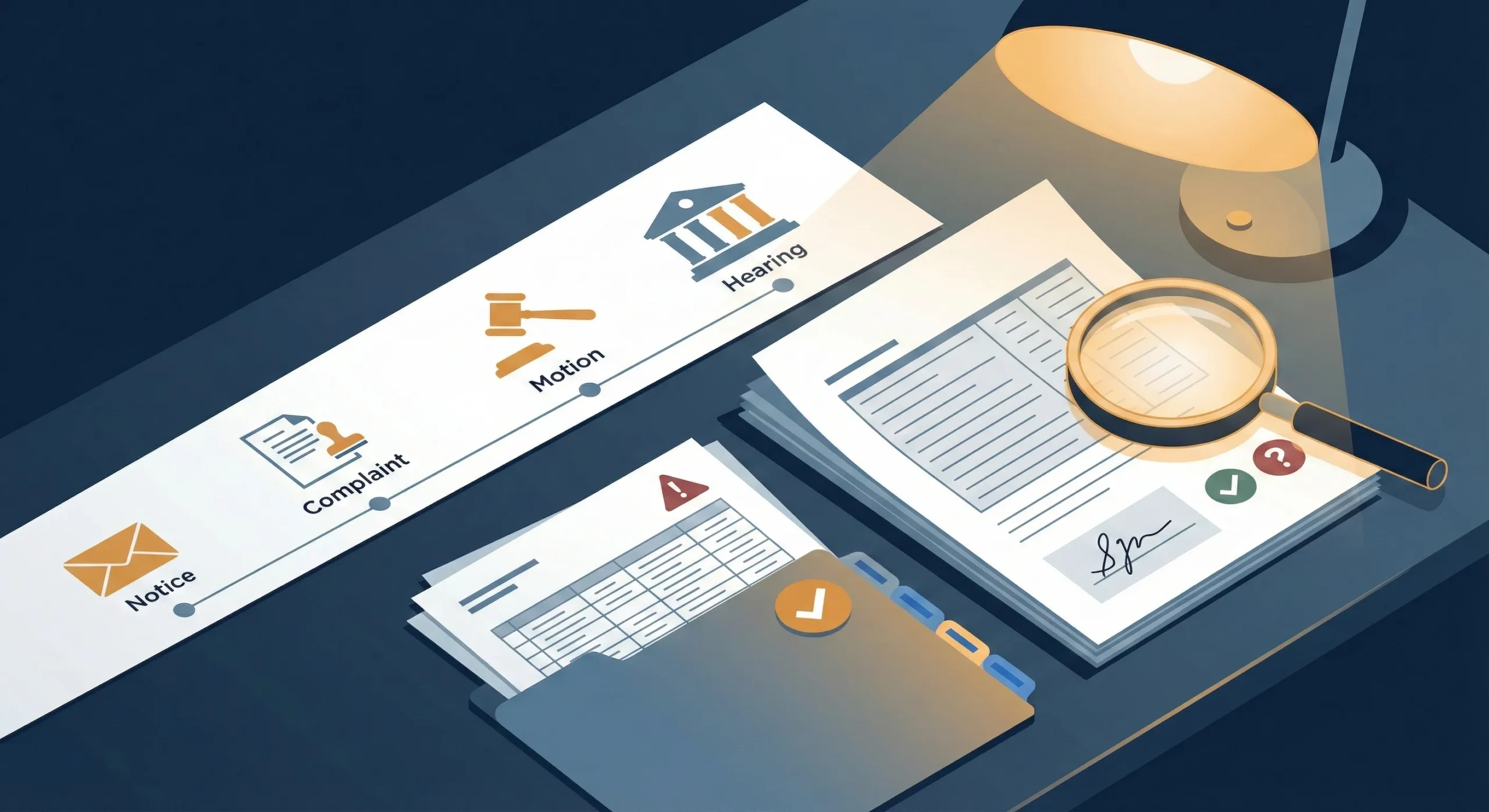
If you’ve been served, received a motion, or have a court date on the calendar, the worst move is guessing. Foreclosure is procedural: the lender has to follow rules, meet deadlines, and prove its case. Your job is to protect your position while you decide what outcome you want—keeping the home, buying time, negotiating terms, or landing in a controlled way.
Our approach is simple: first we identify where you are in the process, then we pressure-test what the lender filed, and then we map the next step that preserves the most leverage within your timeframe.
Not sure what stage you’re in? Send your most recent notice, summons/complaint, motion, or court date. We’ll confirm where you are and what matters next. Request a Free Case Analysis and/or call (312) 775-0980.
Below is an evidence-first overview of how foreclosure defense works in Illinois (and what court actually feels like), plus a practical checklist for what to bring so your consult produces clear next steps—not vague reassurance.
Upcoming court date?
Send your summons/complaint and the date. We’ll explain what the hearing is and what to do before you walk in.
The Big Picture: Foreclosure in Illinois Is a Lawsuit
Foreclosure is the legal process that allows a lender or lien holder to take ownership of a property when the borrower defaults. In Illinois, most foreclosures are judicial, meaning the case goes through the court system and a judge ultimately rules after the parties have the opportunity to present arguments.
That one fact changes everything: you are not “done” because you missed payments. The lender still has to prove its case, follow procedure, and obtain the rulings it needs before there can be a sale.
Why Timing Matters More Than Motivation
Many people delay action because they feel overwhelmed. Unfortunately, the court timeline doesn’t pause for stress. The safest mindset is: protect the file first, then decide the long-term plan.
Translation: meet deadlines, show up when required, and don’t let the lender win by default while you’re still figuring out what to do.
Quick rule: If you received a summons/complaint, a motion for default, or a motion for summary judgment, you’re no longer in “wait and see” territory.
When counsel is involved early, strategy is cleaner: you preserve defenses, keep negotiation leverage, and avoid accidental mistakes that make later solutions harder.
Courtroom Reality: What Typically Happens at Hearings
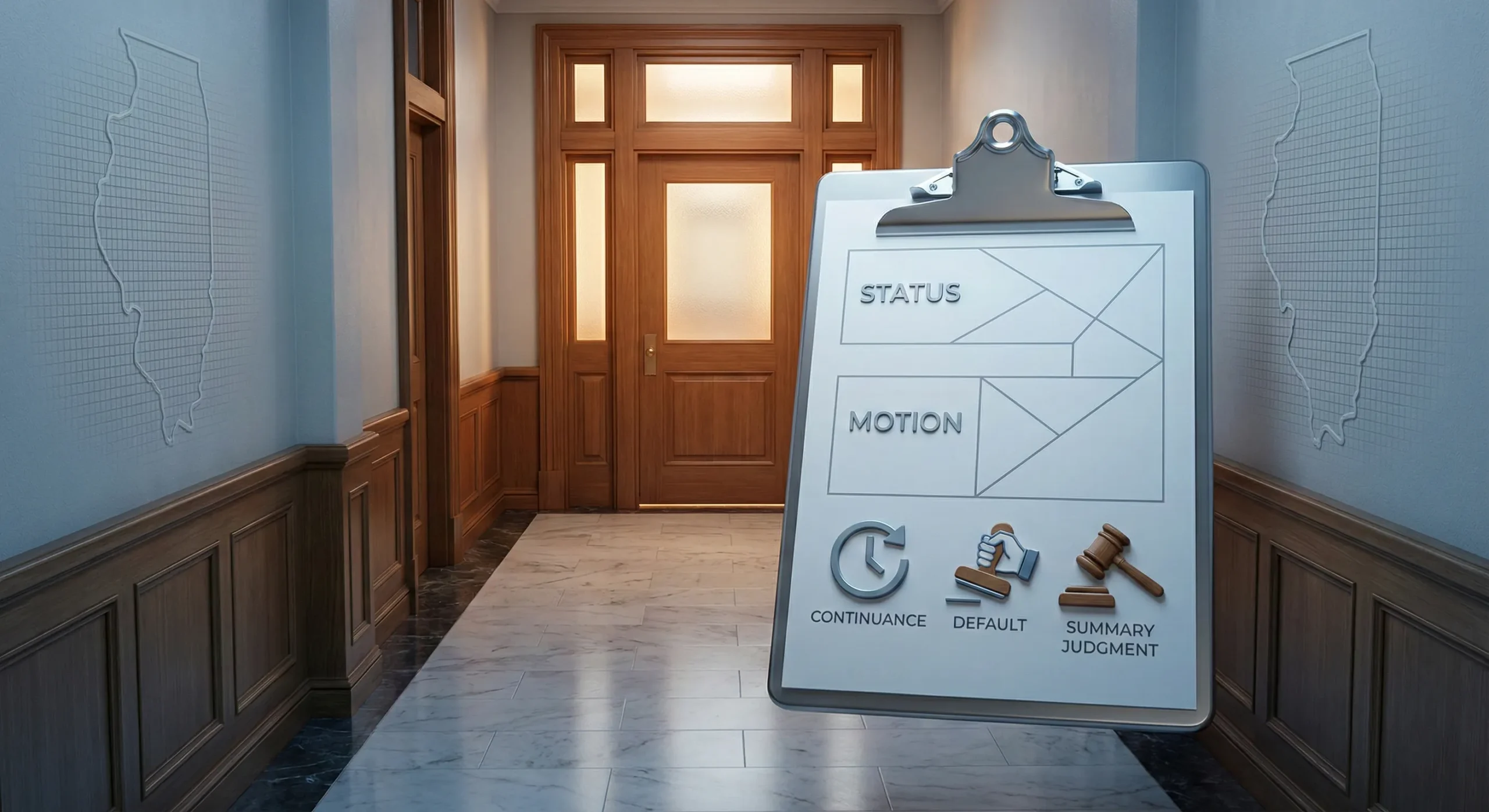
Foreclosure hearings usually move fast. Many calls are short, and courts often work through long lists of cases on status and motion calendars. What looks like a “small” request by the lender’s lawyer—like a continuance, default, or summary judgment—can dramatically shift your case.
How to stop court from feeling terrifying:- Know what type of call it is (status vs motion)
- Know what the lender is asking for (and what that request means)
- Know what you need to do before the next date to protect leverage
Our goal is to make court predictable: you should know what the call is, what the judge is watching for, and what you can do before the next date to improve your posture.
Sale or deadline close?
Timing matters. Call now so we can prioritize the review and discuss time-sensitive options.
How Foreclosure Defense Creates Leverage
Foreclosure defense is not just “showing up.” It’s building a posture that forces the lender to prove its case and makes negotiation real. We start by pinpointing your stage, then pressure-test standing, service, compliance, and the numbers—so you’re not negotiating blind.
Leverage checklist:- Stage clarity: what’s been filed, what’s pending, what’s next
- Filing pressure-test: service, standing, compliance, documents
- Numbers audit: payment history, escrow, fees, reinstatement figures
- Deadline plan: what must be done before the next court date
Options Besides Panic: Defense + Negotiation + Loss Mitigation
Depending on your stage and facts, options may include court-based defenses, negotiated resolutions, and loss mitigation (like loan modification). A strong plan protects your rights while keeping realistic options open.
A smart plan usually has two tracks running at the same time:
- Court track: protect deadlines and build defenses
- Resolution track: pursue the best available outcome (modification, settlement, controlled exit)
What You Should Bring to a Case Analysis
If you have them, bring foreclosure notices, court papers, your mortgage statement, and letters from your lender/servicer. If you don’t have everything, send what you have and we’ll tell you what’s missing and why it matters.
Fast-start document list:- Summons/complaint + case number
- Any motion you’ve received (default, summary judgment, sale-related)
- Most recent mortgage statement
- Payment history / escrow letters (if available)
- Modification/forbearance paperwork and upload confirmations
Even if your file is messy, that’s normal. The goal is to turn it into a clean timeline and exhibit set so decisions are made on proof—not confusion.
If a Sale Date Is Scheduled or a Deadline Is Close
When timing is tight, strategy becomes triage: identify the highest-risk court event, preserve the strongest immediate protections, and avoid moves that shut doors. The right action depends on the exact posture of your case.
If you’re under pressure, the best next step is simple: send the newest document you received and the next court date. We’ll tell you what matters first.
Don’t self-sabotage: Missing a hearing or ignoring a motion can create a default posture that is harder (and sometimes more expensive) to unwind.
If you’re facing a near-term deadline, call sooner rather than later. The earlier we see the file, the more options usually stay on the table.
Important Disclaimers and What Working Together Means
Submitting a form or requesting a case analysis does not create an attorney-client relationship. An attorney-client relationship is only formed after a conflicts check and a signed agreement.
Educational only: This page is general information, not legal advice. Foreclosure defense is case-specific, and outcomes depend on facts, documents, and timing.
If you want clarity without panic, start with the facts: what you received, what’s due next, and what outcome you want. We’ll build the plan around that—fast.
If you’re not sure whether you need foreclosure defense, start with a simple test: do you have a court case number, a motion, or a hearing date? If yes, get a case-specific review.
Want a leverage plan?
We’ll confirm your stage, pressure-test the filings, and map the next best move—without panic.
Frequently Asked Questions
Foreclosure defense in Illinois—explained in plain English. Educational only; not legal advice.
Written By: