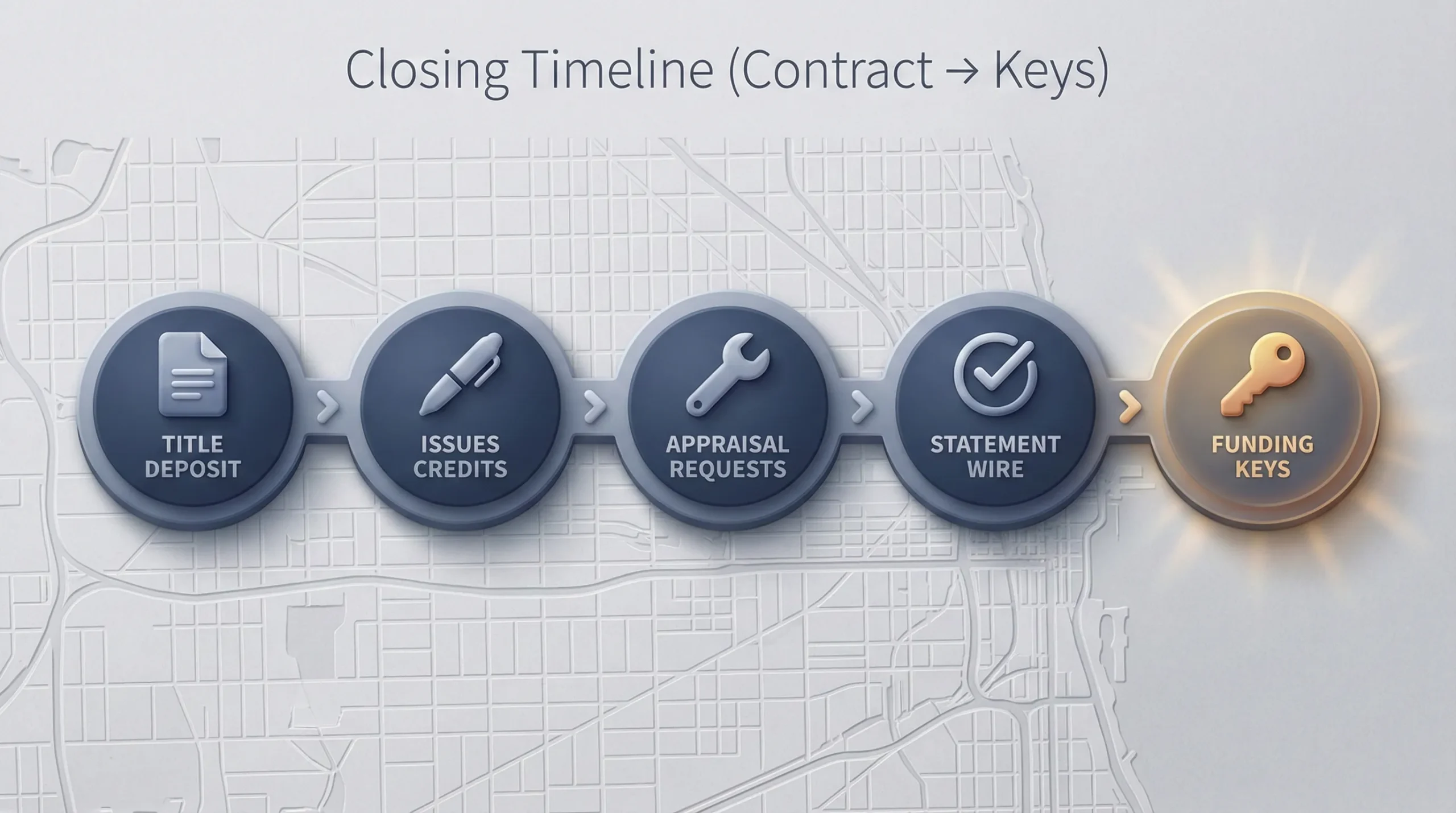
A real estate closing is not one moment—it’s a sequence of deadlines, approvals, and negotiations that lead to the signing table. When you understand the sequence, you can make better decisions, ask smarter questions, and catch issues early (when they’re easiest to fix).
Pro tip:
Closing is a financial event and a legal event. Don’t wait until closing day to learn what you’re paying, what you’re signing, or what you’re responsible for.
If you’re under contract now, this page will help you feel more in control. If you’re not under contract yet, it will help you recognize what “good preparation” looks like before you commit.
Free Consultation
Have a contract or closing date?
Call (312) 775-0980 for a free consultation.
I Have a Contract—What Happens First?
Stage 1: Attorney Review Period
After the contract is fully executed, the “behind-the-scenes” work begins. Typically, the seller side orders preliminary title information (including loan payoffs if applicable) and pulls property tax information. Meanwhile, attorneys and agents work to resolve the deal’s legal and practical details—title issues, financing steps, inspection terms, repair negotiations, credits, and tax prorations.
Mindset: try to keep emotion out of the process. The purpose of attorney review is to protect your interests and control costs while keeping the deal moving.
What “Clear to Close” Usually Means (For Buyers)
If you’re financing the purchase, closing usually waits on an
unconditional approval (often called “clear to close”). Getting there can require:
- Appraisal
- Inspection documentation
- Proof of income and assets
- Verification letters and explanations requested by the lender
The seller typically isn’t involved in the lender’s process—they’re waiting for final approval.
Practical takeaway:
If your lender asks for documents, respond quickly. Slow borrower responses are one of the most common reasons closings get delayed.
For more context on closing roles and responsibilities, see:
Real Estate.
What to Expect From Your Inspection
Unless the property is being sold as-is (common in some distressed situations), inspections are a major negotiation point. A clean, accessible property often leads to a smoother inspection experience—because the inspector can actually see what they need to see and the home presents as well maintained.
How inspection negotiations usually work:- Buyer receives the inspection report
- Buyer requests repairs or a credit
- Seller responds: repair, credit, or decline
- Parties finalize an agreement (and document it properly)
Note: some lenders and loan types may restrict “credits in lieu of repairs,” which can force repairs before closing.
If you receive an inspection report, share it immediately with your attorney and agent so you can prioritize the issues that matter most (and avoid getting distracted by cosmetic items).
Send Your Contract
Email your contract and we’ll review it for risks, timelines, and negotiation leverage.
A Typical Buyer Inspection Checklist (What Inspectors Look At)
Every inspector has their own style, but many focus on the same core systems. Here’s a practical, simplified checklist buyers should expect:
Typical inspection focus areas:- Roof & attic: missing/damaged shingles, wear, gutters, leaks, ventilation
- Exterior: siding condition, broken windows, rot, sealing
- Plumbing: pressure, leaks, pipe condition, water damage
- HVAC: airflow, functionality, equipment age and history
- Electrical: outdated wiring, panel capacity, code concerns, loose connections
It’s Closing Day (Buyers and Sellers)
Final walk-through: once the buyer’s loan is unconditionally approved, the buyer should do a final walk-through—often verifying that agreed repairs were completed. If the walk-through fails, the parties should resolve it before closing (repair completion or a lender-approved solution).
What to bring to closing:- Photo ID
- Your questions about the settlement statement
- Seller: keys and security codes + repair receipts (if applicable)
- Buyer: cashier’s check or wire for funds needed to close (confirm amounts)
Wire Safety (Read This Twice)
Wire fraud is real, and it often targets real estate closings. The safest rule is simple:
Always call and confirm wire instructions using a verified phone number before sending money.
If anything feels off—unexpected changes, urgent language, a different account—pause and verify.
Pro tip:
Send a little extra only if your closing team advises it—overages are typically refunded depending on amount and policy.
Never rely on last-minute email instructions alone. Verification is what keeps your money safe.
Sellers can reduce friction by preparing early. These steps help the inspector access what they need, and they help negotiations stay grounded in facts.
Preparation doesn’t hide real issues—but it helps the process stay efficient and reduces “inspection chaos” that can lead to unnecessary disputes.
Seller preparation (quick timeline):- One month+ before: gather repair records, locate survey/map, fix what you can (or be prepared to negotiate)
- One week before: ensure access to panels/attic/crawlspace, remove clutter, confirm utilities are on (if vacant)
- Day before: clean thoroughly, check lights/appliances, re-check access points
- Inspection day: tidy up, secure pets, leave the home for the inspection window
Closing Day Expectations and Typical Costs
At closing, the title company coordinates documents and distributions—payoffs, commissions, prorations, taxes, fees, and proceeds. Depending on the deal, sellers may occasionally need to bring funds to closing (usually not in short sales).
Typical seller expenses:- Remaining mortgage payoff (if applicable)
- Agent commissions
- Prorations (taxes/utilities/HOA/insurance, as applicable)
- Attorney/escrow fees
- Title-related fees (policy, updates, CPLs, wire/overnight fees)
- Survey (when applicable)
- Transfer taxes (varies by location)
Typical buyer expenses:- Title-related fees (loan policy, endorsements, updates, CPLs, wire fees)
- Escrow fees (structure varies by deal type)
- Attorney fees
- Transfer taxes
- Loan fees (origination, points, appraisal, etc.)
Seller warning: don’t cancel homeowner’s insurance or utilities until the closing is fully complete. Leaving a property uninsured or without heat/AC can create serious problems and may jeopardize the transaction.
Remember: the list above is typical, not exhaustive. Your attorney and agent should tell you what’s required for your specific transaction.
Closing Day Help
If you’re close to closing, we can confirm what to bring, what to review, and what to question before you sign.
Frequently Asked Questions
Common questions about closings, title work, and buyer/seller costs in Illinois.
Written By: